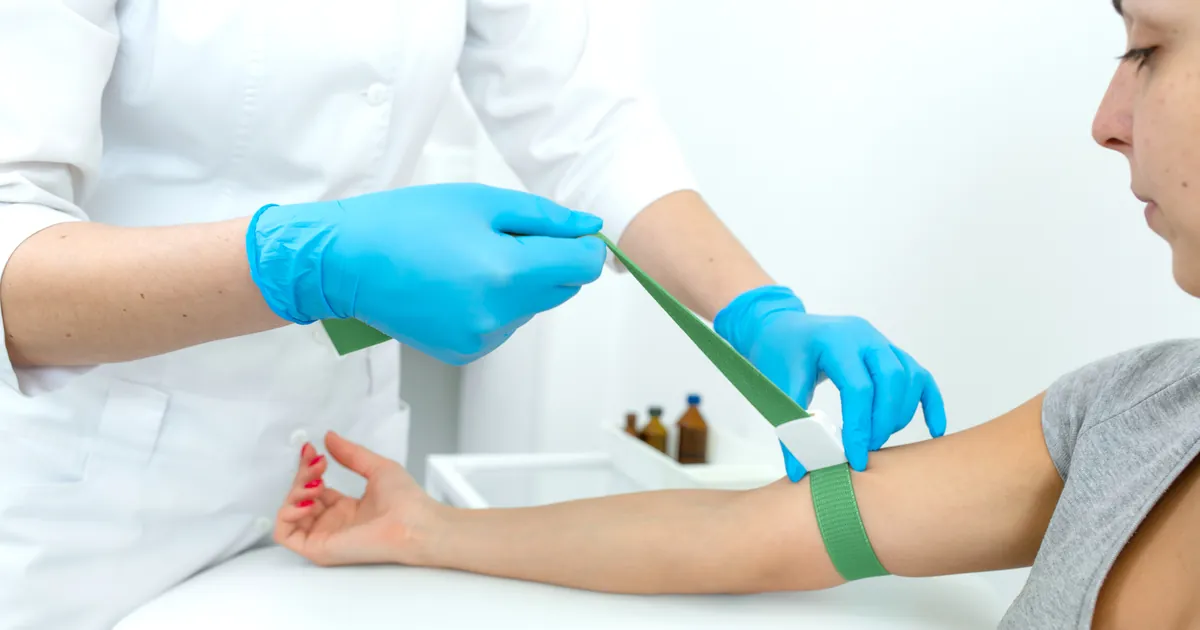
In 46 states there is no law requiring a phlebotomist to be certified. In four — California, Nevada, Washington and Louisiana — there is. So the legal answer is usually yes.
The practical answer is different, and it is the one that decides whether you get hired.
The four states that regulate phlebotomy
These states license or certify phlebotomists by law. Working without meeting the requirement is not a matter of employer preference — it is not permitted.
- California — the Department of Public Health issues the Certified Phlebotomy Technician (CPT I) certificate, requiring 40 hours of classroom instruction and 40 hours of practical training, including documented venipunctures and skin punctures
- Nevada
- Washington
- Louisiana
🔴 Requirements change, and only the state's own agency is authoritative. Our state pages link to each agency directly — check before you enrol anywhere, and never rely on a school's summary of a state's rules.
Everywhere else: legal, but
In the other 46 states, no state agency requires certification. What fills the gap is employers, and they are not lenient.
Most hospital and lab postings ask for certification, or require it within a set period of hiring. Job listings are the honest guide here — read twenty in your area and you will see the pattern quickly.
Accreditation requirements push the same way. Laboratory accreditation standards drive employers toward documented, credentialed staff, which pushes certification from "preferred" to "effectively required" at the larger organisations.
Certification is portable, employment is not. Trained on the job at one hospital, you may find the next employer in another state does not recognise that history. A national certification travels with you.
Where uncertified work does happen
It is not nothing:
- Blood and plasma donor centres frequently train from scratch — often the most realistic uncertified entry point
- Small physician offices and clinics sometimes train a medical assistant to draw
- Hospital trainee programs occasionally hire and train, requiring certification within a set window
- Some research settings
The pattern is real: these are lower-paid, less flexible entry points, and several of them are explicitly a route to certification rather than an alternative to it.
Why certification is usually worth it anyway
Given median tuition of about $700 against a median wage of $45,230, the arithmetic barely needs doing. The credential typically costs less than a fortnight of the wage it helps you earn.
What it buys:
- A much larger pool of jobs. The best-paying settings are the strictest
- Portability. It moves with you between employers and states
- Negotiating position. You are a different candidate
- Documented live draws. Certification pathways require them, and an externship arranges them — which is far harder to organise alone
The main national credentials are the NHA's CPT, the ASCP's PBT, and AMT's RPT. They differ in eligibility routes and recognition; we compared them in CPT vs PBT. Check each body's site for current fees and requirements — those change and we do not republish them.
The realistic answer
Can you? In most states, legally, yes.
Should you plan on it? No. Uncertified work exists at the lower end of the market and is often a stepping stone to certification rather than a substitute. Meanwhile the credential costs a few hundred dollars and a few weeks.
The one place this is not a judgement call: in California, Nevada, Washington or Louisiana, get certified, because the alternative is not a legal option.
Compare accredited programs by state — every listing shows which certifications it prepares you for.